When we think about saving money, we usually think about budgeting, investing, cutting expenses, or finding better deals.
But there is another simple habit that can quietly improve your finances: decluttering your home.
Decluttering is not just about having a clean and organised house. It can also change the way you shop, spend, use, and value the things you already own.
After embracing a more minimalist lifestyle, I realised something important:
The less unnecessary stuff I owned, the less I felt the need to buy.
And that can have a direct impact on your finances.
Here are 10 ways decluttering can help you save money.
1. You Stop Buying Things You Already Own
Have you ever bought something only to discover that you already had one at home?
Maybe it was a kitchen gadget, a cleaning product, stationery, clothes, or even groceries.
When your home is cluttered, it becomes difficult to know what you actually own.
You may have three bottles of the same cleaning product simply because you couldn’t find the one you already had.
Decluttering makes your belongings visible.
Once everything has a designated place, you are more likely to think:
“I already have this. I don’t need to buy another one.”
That simple awareness can prevent unnecessary spending.
2. Decluttering Helps You Identify Your Shopping Triggers
Sometimes we don’t buy things because we need them.
We buy them because we’re bored, stressed, excited, influenced by social media, or simply because there is a sale.
When you start decluttering, you begin to notice a pattern.
You may look at your unused clothes and realise how often you shop for clothes.
You may find unopened skincare products and realise that you frequently buy things because of attractive packaging or online recommendations.
Your clutter can actually become a record of your past spending habits.
And once you recognise those patterns, you can make better decisions in the future.
3. You Make Better Use of What You Already Own
One of the biggest benefits of decluttering is discovering things you forgot you had.
That old handbag.
The book you haven’t read.
The kitchen appliance sitting at the back of a cabinet.
The clothes still carrying their tags.
Instead of buying something new, you can start asking:
“Can I use what I already have?”
This mindset is extremely powerful for saving money.
Minimalism doesn’t necessarily mean owning very little.
It means making sure the things you own are useful, meaningful, or genuinely valuable to you.
4. You Become Less Vulnerable to Sales
“50% OFF.”
“Buy 2, Get 1 Free.”
“Limited-Time Offer.”
“Only 3 Left!”
We see these messages everywhere.
Sales can make us feel that we’re saving money simply because the price is reduced.
But if you didn’t need the product in the first place, you haven’t saved money.
You have spent money at a discount.
Decluttering can change your relationship with shopping.
When you see how much you already own, a sale becomes less exciting.
You start asking:
“Would I buy this if it wasn’t on sale?”
If the answer is no, you probably don’t need it.
5. You Spend Less on Storage and Organisation
Here’s an interesting problem:
Sometimes we buy more things to organise the things we bought.
More storage boxes.
More baskets.
More containers.
More shelves.
More organisers.
But if the underlying problem is simply too much stuff, organising everything may not solve it.
Decluttering first can reduce the amount of storage you actually need.
Instead of constantly trying to find more space, you can create more space by owning fewer unnecessary things.
Declutter before you organise.
This one rule can save both money and time.
6. You Reduce Duplicate Purchases
Duplicate purchases are particularly common in kitchens, bathrooms, wardrobes, and stationery drawers.
You might have:
- Multiple water bottles
- Extra containers
- Several similar handbags
- Too many towels
- Duplicate cleaning products
- More clothes than you can realistically wear
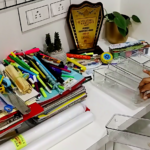
- Multiple notebooks and pens
When you declutter, you can see exactly how many duplicates you own.
This makes it easier to establish your personal limits.
For example, instead of automatically buying another water bottle because you like the design, you might realise:
“I already have enough.”
That one sentence can save you money repeatedly.
7. You Spend Less on Maintaining Your Stuff
Everything you own has a cost beyond its purchase price.
Clothes need washing and ironing.
Cars need maintenance.
Furniture needs cleaning and upkeep.
Electronic devices need accessories and repairs.
Larger homes require more cleaning and maintenance.
Even small possessions require your time and attention.
The more things you own, the more resources you may spend maintaining them.
Decluttering reduces that burden.
You don’t just save money by buying less.
You may also save money by having less to maintain.
8. You Become More Conscious About the Cost of Your Purchases
Decluttering can create a powerful mental shift.
When you hold an unused ₹2,000 item that has been sitting in a cupboard for two years, you may think differently about your next purchase.
You start thinking beyond:
“Can I afford this?”
and start asking:
“Will I actually use this?”
That’s an important financial distinction.
Being able to afford something doesn’t automatically mean buying it is a good decision.
Before purchasing something, consider:
- How often will I use it?
- Do I already own something similar?
- Where will I keep it?
- Will I still want it six months from now?
- Is this solving a real problem?
These questions can prevent impulse purchases.
9. Decluttering Can Reduce Lifestyle Inflation
As our income increases, it is natural to increase our spending.
A bigger salary can lead to:
More clothes.
More gadgets.
More subscriptions.
More furniture.
More expensive restaurants.
More shopping.
This is known as lifestyle inflation.
Decluttering can help you recognise that happiness doesn’t necessarily increase with the number of things you own.
You can earn more without feeling the need to consume more.
Instead of automatically increasing your lifestyle every time your income increases, you can direct more of that additional income towards:
- Investments
- Emergency savings
- Debt repayment
- Retirement
- Experiences
- Financial goals
That is where minimalism and financial freedom connect.

10. Decluttering Changes Your Definition of “Enough”
This may be the biggest financial benefit of all.
When you constantly feel that you need something more, there is no finish line.
There will always be a newer phone.
A bigger house.
A better car.
More fashionable clothes.
More home décor.
More gadgets.
But when you start appreciating what you already have, your definition of “enough” begins to change.
And when you need less to feel satisfied, you don’t have to spend as much money trying to feel satisfied.
That’s where decluttering becomes more than a cleaning exercise.
It becomes a financial habit.
Decluttering Doesn’t Mean Throwing Everything Away
There is one important thing I want to clarify.
Decluttering doesn’t mean throwing away everything you own or living with an extremely small number of possessions.
Minimalism is not a competition.
You don’t have to own 30 items.
You don’t have to follow someone else’s rules.
You simply need to look at your belongings honestly and ask:
“Is this adding value to my life?”
If something is useful and you love using it, keep it.
If something is meaningful, keep it.
If something serves your family well, keep it.
The goal isn’t to own the least.
The goal is to stop spending money on things you don’t need.
Final Thoughts
Decluttering won’t magically make you wealthy.
But it can change your relationship with consumption.
When you own less unnecessary stuff, you can see what you already have.
When you see what you already have, you may buy less.
When you buy less, you have more money available for the things that actually matter.
And over time, those small decisions can make a meaningful difference.
Financial freedom isn’t only about earning more money. It’s also about learning to need less.
The next time you’re tempted to buy something, pause for a moment and ask yourself:
“Do I really need this, or do I simply want something new?”
That one question can save you more money than you might expect.
Vasanthi Shankar Digital download Store
Link – https://vasanthi-shankar-digital-download-store.myshopify.com/
Join the membership for exclusive access to my real monthly budget & spending breakdown –https://www.youtube.com/channel/UCfAgW9MJUWn9wnnd9NSnlzQ/join
Vasanthi Shankar Amazon Store Front Link – https://www.amazon.in/shop/mrs.shankarsrecipes
Vasanthi Shankar WhatsApp Channel – https://www.whatsapp.com/channel/0029VaBNmt22v1IqxpnjLr2W
Things I use for filming my videos- https://amzn.to/4ausvPC