Relying on just one salary or one source of income can feel comfortable when everything is going well. But what happens when your expenses increase, your job changes, or an unexpected financial need comes up?
This is why many people are interested in creating multiple sources of income.
Having multiple income streams doesn’t necessarily mean working 16 hours a day or starting several businesses at once. The goal is to gradually build additional sources of money that complement your primary income.
The important thing is to start small, choose something realistic, and build it consistently.
What Does Multiple Sources of Income Mean?
Multiple sources of income simply means receiving money from more than one source.
For example, someone might have:
- Salary from a full-time job
- Income from freelance work
- Interest from savings or deposits
- Investment income
- Rental income
- Income from a small online business
- Royalties or digital-product sales
You don’t need all of these.
Even having one additional income source can be a useful starting point.
7 Ways to Create Multiple Sources of Income
1. Start With Freelancing
One of the simplest ways to create an additional income stream is to monetize a skill you already have.
Depending on your experience, you could offer services such as:
- Content writing
- Translation
- Video editing
- Graphic design
- Social media management
- Photography
- Bookkeeping
- Website development
- Virtual assistance
- Consulting
You don’t necessarily need to learn something completely new.
Start by asking:
“What skill do I already have that someone might be willing to pay for?”
Then look for opportunities to offer that skill on a freelance or project basis.
2. Create Digital Products
Digital products can be another way to turn your knowledge or skills into an income source.
Examples include:
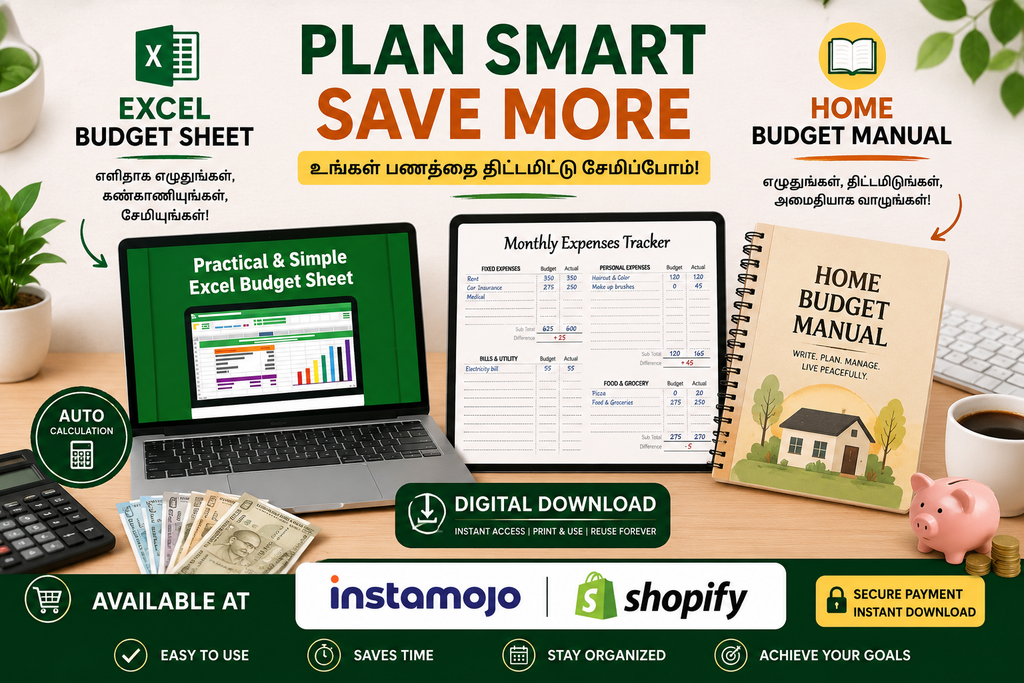
- Budget spreadsheets
- Printable planners
- E-books
- Checklists
- Templates
- Online guides
- Notion templates
- Educational resources
One advantage of digital products is that you can create the product once and potentially sell it repeatedly.
But remember: creating a product doesn’t automatically generate income. You still need a useful product, a way to reach potential customers, good communication, and ongoing improvement.

3. Build a Content-Based Income Stream
If you enjoy creating content, platforms such as YouTube, blogs, newsletters, or social media can eventually become additional income channels.
Possible revenue sources can include:
- Advertising
- Sponsorships
- Affiliate marketing
- Digital products
- Memberships
- Courses
- Services
Content creation usually takes time to build.
Instead of expecting immediate income, think of it as building an audience and an asset over time.
For example, a useful YouTube video may continue attracting viewers long after you publish it.
4. Invest for Long-Term Income and Growth
Investing can create another potential source of returns, although investment returns are not guaranteed.
Depending on your goals, risk tolerance, time horizon, and circumstances, investments may include:
- Fixed deposits
- Bonds
- Mutual funds
- Stocks
- PPF
- NPS
- Other regulated investment products
The purpose of investing isn’t simply to create quick monthly income.
For many people, investing is primarily about building wealth over the long term.
Before investing, understand the product, associated risks, costs, taxes, and whether it fits your financial goals.
5. Consider Rental Income
If you own a suitable property, rental income can become another source of cash flow.
However, rental income isn’t completely passive.
Property owners may have to deal with:
- Maintenance
- Repairs
- Vacancies
- Tenant-related issues
- Property taxes
- Insurance
- Financing costs
So calculate the actual net income, rather than looking only at the monthly rent.
6. Turn a Hobby Into a Small Business
Sometimes a hobby can become a source of income.
For example:
- Baking
- Handmade products
- Art
- Photography
- Gardening
- Teaching
- Cooking
- Sewing
- Tutoring
You don’t have to turn every hobby into a business.
But if there is genuine demand for something you enjoy doing, you could test it on a small scale before investing significant money.
7. Use Your Experience to Teach Others
Your knowledge can also become an income source.
You could consider:
- Online classes
- Workshops
- One-on-one coaching
- Corporate training
- Educational content
- Paid guides
- Consulting
Think about a problem you have solved through your own experience.
Could you help someone else solve the same problem?
If yes, that knowledge may have value.
Don’t Try to Build Everything at Once
One common mistake is trying to create five or six income streams simultaneously.
That can quickly become overwhelming.
Instead, use a simple approach:
Main income → Stabilize finances → Build one additional income source → Improve it → Consider another
For example:
Stage 1
Focus on your primary career and build an emergency fund.
Stage 2
Start a small side income using an existing skill.
Stage 3
Use some of the additional income for savings, debt repayment, or investing.
Stage 4
Once the first additional income source becomes manageable, consider developing another.
The goal isn’t to have the largest number of income streams.
The goal is to build a stronger financial foundation.
Active Income vs Passive Income
You may often hear people talk about “passive income.”
It’s important to understand the difference.
Active income
You generally exchange your time or effort for money.
Examples:
- Salary
- Freelancing
- Consulting
- Tutoring
- Running a service business
Income from assets
Money may come from assets you’ve accumulated or created.
Examples can include:
- Interest
- Dividends
- Rent
- Investment returns
- Royalties
Even income described as “passive” often requires some initial work, capital, maintenance, or ongoing management.
So don’t believe every claim that promises “easy passive income.”
If something promises high returns with little or no risk, be especially cautious.

How to Choose the Right Additional Income Source
Ask yourself these five questions:
1. What skills do I already have?
Start with your existing knowledge before spending money learning something completely new.
2. How much time can I realistically give?
If you already have a demanding job and family responsibilities, choose something that fits your schedule.
3. How much money do I need to invest?
Be careful about businesses or schemes that require large upfront payments.
Start small whenever possible.
4. Is there real demand?
Having a skill isn’t enough.
People must actually be willing to pay for the solution you’re offering.
5. Does it fit my long-term goals?
An additional income source should ideally support your bigger financial goals rather than constantly increasing your workload without purpose.
Avoid These Common Mistakes
Chasing too many income streams
More isn’t always better.
Five poorly managed side hustles can be worse than one well-managed additional income source.
Taking unnecessary debt to start a side business
Don’t borrow large amounts of money just because someone promises that a business will generate quick returns.
Falling for “easy money”
Be cautious about:
- Guaranteed returns
- Get-rich-quick schemes
- Unverified investment opportunities
- Pyramid or fraudulent schemes
- Unrealistic passive-income promises
Research carefully before giving anyone your money.
Ignoring taxes
Additional income can have tax implications.
Keep proper records of your income and expenses and understand the applicable tax rules for your situation.
Burning yourself out
Your health, relationships, rest, and primary career also have value.
An additional income source shouldn’t automatically mean sacrificing all your free time.
Final Thoughts
Creating multiple sources of income isn’t about becoming busy all the time or chasing every possible opportunity.
It’s about creating more financial options.
Your first goal could simply be to earn an additional ₹1,000 a month.
Then perhaps ₹5,000.
Then ₹10,000.
Over time, you can build income sources that support your larger financial goals.
But remember that multiple income streams don’t replace the basics of good financial planning.
Spend intentionally. Build an emergency fund. Manage debt. Protect yourself with appropriate insurance. Invest according to your goals and risk tolerance. And gradually increase your earning capacity.
You don’t need ten income streams.
You may only need a few reliable and sustainable ones that fit your life.
Vasanthi Shankar Digital download Store
Link – https://vasanthi-shankar-digital-download-store.myshopify.com/
Join the membership for exclusive access to my real monthly budget & spending breakdown –https://www.youtube.com/channel/UCfAgW9MJUWn9wnnd9NSnlzQ/join
Vasanthi Shankar Amazon Store Front Link – https://www.amazon.in/shop/mrs.shankarsrecipes
Vasanthi Shankar WhatsApp Channel – https://www.whatsapp.com/channel/0029VaBNmt22v1IqxpnjLr2W