A minimalist home is not an empty home.
It doesn’t mean having only a mattress, one chair and a few plates. It also doesn’t mean throwing away everything you own and starting over.
Minimalism is simply being intentional about what you allow into your home.
You keep things that you genuinely use, need or love—and let go of things that only take up space, create maintenance or make your home harder to manage.
After years of decluttering and simplifying my home, I’ve realised that we often need far less than we think.
In this guide, I’ll share what you actually need in a minimalist home, room by room, and the things you can stop buying.
What Does a Minimalist Home Really Mean?
A minimalist home is a home where every item has a purpose.
That purpose can be practical or emotional.
You might keep a beautiful family photograph because it brings you joy. You might keep five cooking vessels because you use them regularly. You might have a large bookshelf because reading is important to you.
Minimalism isn’t about following a fixed number of possessions.
It’s about asking:
- Do I use this?
- Do I need this?
- Does this make my life easier?
- Would I buy it again today?
- Is the space it occupies worth it?
If the answer is consistently no, the item may not deserve a place in your home.
What You Actually Need in a Minimalist Home
Let’s go room by room.
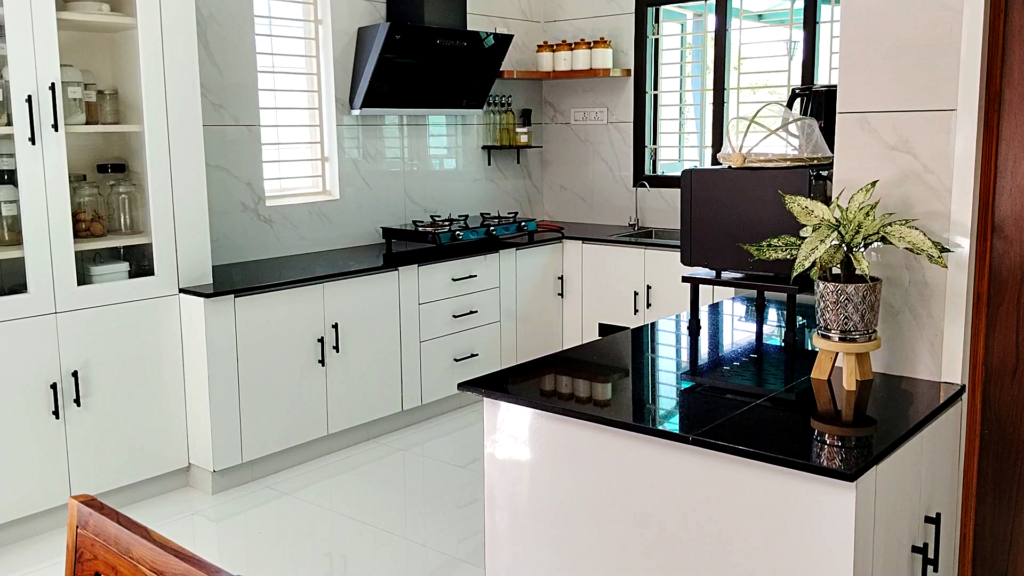
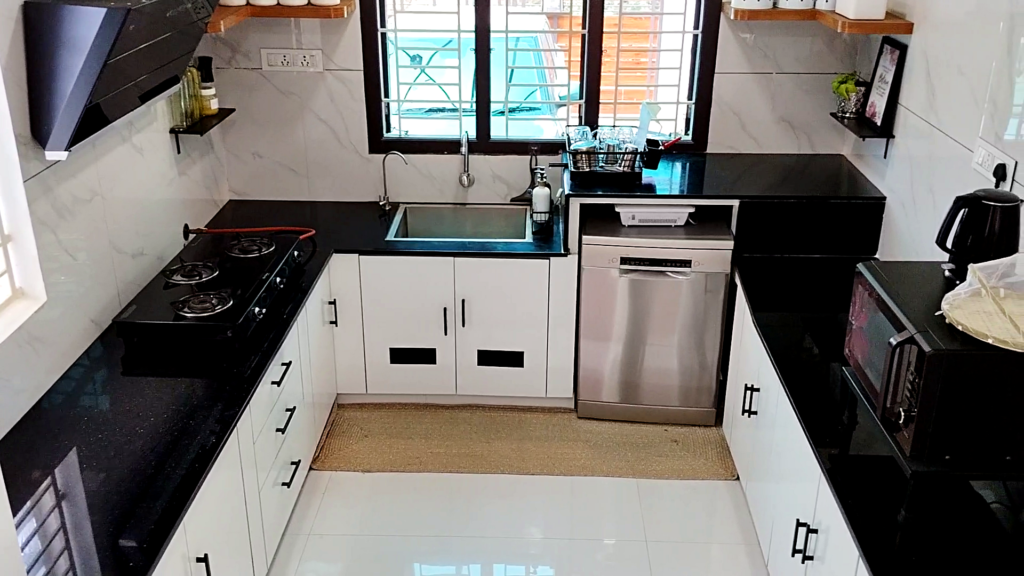
1. Minimalist Kitchen
The kitchen is one of the easiest places to accumulate unnecessary things.
We buy appliances, containers, serving dishes and gadgets thinking they will make cooking easier. But eventually, many of them simply fill our cupboards.
What you actually need:
- Basic cooking vessels
- A few good-quality pans
- Pressure cooker
- Knives
- Cutting board
- Essential cooking tools
- Plates and bowls for your family
- Drinking glasses
- Spoons and forks
- Storage containers you actually use
- A few serving dishes
- Basic appliances that you regularly use
- Cleaning supplies
The important word here is few.
You don’t need 20 containers because they were sold as a set.
You don’t need a different bowl for every type of food.
And you don’t need a kitchen gadget simply because it is trending.
A simple rule:
If you haven’t used a kitchen item in the last year, question whether you really need it.
There may be exceptions for seasonal or occasional items, but most unused kitchen items are simply taking up valuable space.
2. Minimalist Wardrobe
A minimalist wardrobe doesn’t mean owning only 10 clothes.
Your ideal wardrobe depends on your lifestyle.
Someone who works in an office needs different clothes from someone who works from home. A person living in a hot climate needs different clothing from someone living in a cold climate.
What you actually need:
- Everyday clothes
- Work clothes, if required
- Comfortable home clothes
- A few outfits for occasions
- Innerwear
- Sleepwear
- Weather-appropriate clothing
- Comfortable footwear
- A few accessories you actually wear
The goal isn’t to have the smallest wardrobe.
The goal is to have a wardrobe where you can actually see and use what you own.
If your cupboard is full but you repeatedly say, “I have nothing to wear,” that’s usually a sign that you have too many unsuitable clothes rather than too few.
3. Minimalist Bedroom
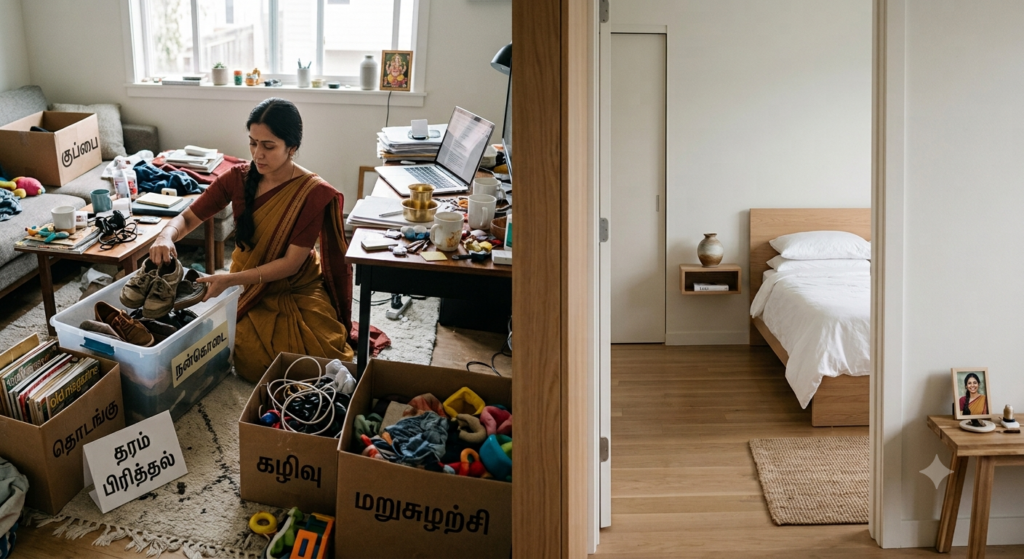
Your bedroom should be a place to rest—not another storage room.
What you actually need:
- Bed
- Mattress
- Pillows
- Bedsheets
- Blankets appropriate for your climate
- Basic bedside lighting if needed
- Essential personal items
That’s enough for many people.
You don’t necessarily need:
- Multiple decorative cushions
- Large collections of soft toys
- Excess furniture
- Decorative objects on every surface
- Clothes piled on chairs
- Several unused storage boxes
A bedroom becomes much easier to maintain when the surfaces are clear.
4. Minimalist Living Room
The living room is often where we try to impress other people.
We buy decorative pieces, large furniture and things we rarely use because we think a home should look “complete.”
But your home doesn’t need to look like a showroom.
What you actually need:
- Comfortable seating
- A table if you use one
- Lighting
- Curtains or other window coverings if needed
- Entertainment setup if you use it
- A few meaningful decorative items
- Storage only where genuinely necessary
You don’t need to fill every empty corner.
Empty space is not wasted space.
It makes a room easier to clean, easier to move around in and visually calmer.
5. Minimalist Bathroom
Bathrooms can quickly become storage spaces for half-used products.
You might have several shampoos, soaps, skincare products and cleaning products simply because you bought them before finishing what you already had.
What you actually need:
- Toothbrush and toothpaste
- Soap/body wash
- Shampoo
- Hair-care products you actually use
- Towels
- Basic grooming products
- Toilet-cleaning supplies
- Bathroom-cleaning supplies
Try finishing one product before opening another whenever practical.
This simple habit can dramatically reduce bathroom clutter.
6. Minimalist Electronics
Electronics are particularly difficult to declutter because we tend to keep them “just in case.”
Old chargers.
Broken headphones.
Unused cables.
Old phones.
Outdated accessories.
Random adapters.
What you actually need:
Keep the electronics you actively use.
For everything else, ask:
What device does this belong to?
If you don’t even know what a cable or charger belongs to, it’s probably time to investigate whether you still need it.
Create one designated place for electronics and cables.
This prevents them from spreading throughout the house.
7. Minimalist Cleaning Supplies
You don’t need a separate cleaning product for every tiny surface in your home.
A small collection of effective cleaning supplies can be enough for most households.
Keep:
- Basic surface-cleaning supplies
- Bathroom cleaner
- Toilet cleaner
- Dishwashing supplies
- Laundry supplies
- Cleaning brushes
- Microfiber cloths or your preferred cleaning cloths
- Mop/broom/vacuum based on your needs
The goal isn’t to have a cupboard full of cleaning products.
The goal is to have the right products and actually use them.
Check Vasanthi Shankar Digital Download store for Cleaning Routine Checklist
8. Minimalist Storage
Here’s something important:
Storage doesn’t solve clutter.
Sometimes, we buy another cupboard, another organizer and another set of containers whenever our home becomes cluttered.
But if you have too much stuff, more storage simply allows you to keep more stuff.
Before buying another organizer, ask:
“Do I need more storage, or do I have too many things?”
Decluttering should come before organizing.
Check Vasanthi Shankar Digital Download store for Whole House Decluttering Checklist
Things You Probably Don’t Need
Minimalism becomes easier when you stop bringing unnecessary things into your home.
Here are some common examples:
1. Duplicate items
Do you really need three identical kitchen tools?
2. Clothes you never wear
Keeping them because “maybe someday” rarely solves the problem.
3. Expired products
Check your bathroom, kitchen and medicine/storage areas regularly.
4. Broken things
If you have been saying “I’ll repair this” for months, make a decision.
Repair it or let it go.
5. Unused gifts
A gift was given to you with good intentions. That doesn’t mean you must store it forever.
6. Promotional items
Free doesn’t mean useful.
7. Excessive decor
You don’t have to decorate every wall, shelf and table.
8. Clothes kept for a fantasy lifestyle
Don’t keep an entire wardrobe for the person you think you might become someday.
9. Kitchen gadgets used once
If a gadget saves you five minutes but creates another item to clean and store, consider whether it’s actually making your life easier.
10. “Just in case” items
Some emergency items are important.
But “just in case” can also become an excuse for keeping everything.
How Many Things Do You Actually Need?
There is no universal number.
A family of four will naturally need more things than someone living alone.
A person who cooks every day will need more kitchen equipment than someone who rarely cooks.
A child will have different needs from an adult.
So instead of asking:
“How many things should a minimalist own?”
Ask:
“How many things do I need for the life I actually live?”
That’s a much better question.
The Minimalist Home Test
Walk through your home and pick up each item.
Ask yourself these five questions:
1. Do I use it?
If yes, keep it.
2. Do I genuinely need it?
If yes, keep it.
3. Do I love it?
If yes, it may deserve a place in your home.
4. Would I buy it again today?
This is one of my favourite decluttering questions.
If you wouldn’t buy it again, why are you keeping it?
5. Is it worth the space and maintenance?
Every possession has a hidden cost.
It needs space.
It needs cleaning.
It needs organising.
It may need repairs.
It may eventually need replacement.
The less unnecessary stuff you own, the less time you spend managing your belongings.
Don’t Declutter Everything at Once
One of the biggest mistakes people make is trying to transform their entire home in one weekend.
Instead, start small.
Choose one:
- One kitchen drawer
- One shelf
- One wardrobe section
- One bathroom cabinet
- One category of belongings
Remove everything.
Sort it into:
KEEP | DONATE | SELL | RECYCLE | DISCARD
Then put back only what deserves to stay.
Small wins create momentum.
Minimalism Is Also About What You Buy
Decluttering your home is helpful.
But preventing unnecessary things from entering your home is even more powerful.
Before buying something, ask:
“Where will I keep this?”
“How often will I use it?”
“Do I already own something that does the same job?”
“Would I still want this if it wasn’t on sale?”
“Will this make my life easier or create another thing to manage?”
A ₹300 item isn’t really a bargain if you don’t need it.
My Simple Minimalist Home Philosophy
I don’t believe a minimalist home needs to look empty.
I believe it should look intentional.
Your home should contain the things that support your real life.
If you love cooking, keep your kitchen equipment.
If you love books, keep your books.
If you have children, your home will naturally contain toys and school supplies.
If you enjoy decorating, keep meaningful decor.
Minimalism isn’t about removing personality.
It’s about removing the excess that gets in the way of your life.
Final Thoughts
A minimalist home isn’t created by buying expensive organizers, matching containers or trendy furniture.
It’s created by making better decisions about what enters—and stays in—your home.
You don’t need a perfect home.
You need a home that is:
- Easy to maintain
- Easy to clean
- Comfortable to live in
- Free from unnecessary clutter
- Designed around your actual lifestyle
Start with one drawer today.
Then one shelf.
Then one cupboard.
Over time, these small decisions can completely change how your home feels.
You don’t need more space. You may simply need less stuff.
Vasanthi Shankar Digital download Store is Now Available Both in Instamojo & Shopify Platform
Shopify Link – https://vasanthi-shankar-digital-download-store.myshopify.com/
Join the membership for exclusive access to my real monthly budget & spending breakdown –https://www.youtube.com/channel/UCfAgW9MJUWn9wnnd9NSnlzQ/join
Vasanthi Shankar Amazon Store Front Link – https://www.amazon.in/shop/mrs.shankarsrecipes
Vasanthi Shankar WhatsApp Channel – https://www.whatsapp.com/channel/0029VaBNmt22v1IqxpnjLr2W